
Control Resonant vs Control
Last updated 2026-09-24 · Verified against Remedy details, gameplay and reviews · 8 min read
Is Control Resonant the sequel to Control?
On this page
Is it Control 2?
Yes. Control Resonant is the direct full sequel to Control (2019), originally announced and developed under the working title Control 2. Jesse’s story continues, but her brother Dylan Faden takes over as the playable lead after she goes missing following a massive containment breach across Manhattan.
It is not an incremental spin-off or a standalone experiment. Swapping Jesse’s ranged firearm for Dylan’s shapeshifting melee weapon completely resets the combat rhythm: encounters demand close-range commitment, aggressive dodging, and rapid combo execution rather than hanging back behind telekinetic shields.
Control vs Resonant at a glance
| Control (2019) | Control Resonant | |
|---|---|---|
| Playable lead | Jesse Faden, the FBC’s new Director | Dylan Faden, searching for his missing sister |
| Main weapon | Service Weapon (firearm morphs into pistol, shotgun, sniper forms) | Aberrant (shapeshifting melee forms; no traditional guns) |
| Combat | Ranged gunplay interwoven with Launch and Shield cooldowns | Close-quarters melee combos, Falter stagger, Executions and burst powers |
| Main setting | Linked sectors inside the Oldest House | Distorted Manhattan districts, with returning Bureau locations |
| Exploration | Metroidvania-style interconnected rooms with clearance cards | Open-ended district sandboxes, shifting gravity surfaces and vertical routes |
| Movement | Evade and Levitate around rooms and arenas | Reach across gaps and navigate shifting gravity |
| Builds | Ability upgrades, weapon mods and personal mods | Weapon branches, combat abilities, talents and crafted artifacts |
| Progression | Missions and exploration improve Jesse’s toolkit | Zone progression and build upgrades give you several advancement paths |
| Replay | Continue exploring and completing optional activities | New Game Plus carries combat progression into a fresh run |
| Difficulty options | Assist Mode can make the game easier | Expanded Assist Mode can also increase the challenge |
Combat: from Service Weapon to Aberrant
In Control, Jesse operates like a supernatural gunslinger. The core loop is an alternating rhythm: empty your Service Weapon magazine, hurl chunks of concrete with Launch while the gun reloads automatically, and use Levitate to pick off targets from high angles. Even aggressive setups revolve around maintaining mid-range control over the arena.
In Resonant, the Aberrant eliminates the safety of distance. Dylan's primary weapon is a shapeshifting melee construct that transitions seamlessly between sweeping light strikes, heavy secondary swings, and decisive combo finishers. Combat is built around building up enemy stagger (Falter) to trigger high-impact Executions, creating brief windows of invulnerability and vital resource recovery in the thick of a brawl.
Supernatural powers remain, but their role has shifted from primary damage dealers to tactical openers. Abilities like Barrage, Shield, and Volatile Anomaly let Dylan close distances safely, interrupt incoming heavy attacks, or blast grouped mobs away when surrounded. You still weave powers and weapons together, but the goal is always to crack an opening and stay on the offensive.
The environmental destruction reflects this shift in scale. Where Control treated players to paper storms, shattering concrete pillars, and flying office desks in tight rooms, Resonant turns the mayhem outward: shattered streetlights, airborne sedans, collapsing scaffolding, and fractured asphalt flying across open city intersections.
World and movement
The Oldest House is a masterclass in claustrophobic Metroidvania design. You orient yourself by sector directories, memorize security checkpoints, and constantly backtrack as higher clearance levels and newfound abilities unlock previously sealed departmental wings. The bureaucratic familiarity of desks, filing cabinets, and retro computers makes the shifting brutalist architecture feel eerie and grounded.
Resonant swaps the labyrinthine building for a fractured, surreal cityscape. Manhattan is broken down into distinct, open-ended districts rather than a singular uninterrupted open-world map. Avenues wrap around floating chasms, skyscrapers lean at impossible 90-degree angles, and pocket anomalies turn city blocks into multi-tiered traversal puzzles.
- Control: the Oldest House’s enclosed office spaces
- Control Resonant: streets folded around a city-sized void
Verticality changes accordingly. Jesse relied on Levitate to float over enemy crossfire and drift across indoor gaps. Dylan instead navigates with tethering abilities like Reach, paired with dynamic gravity zones where vertical walls become walkable surfaces.
If you loved mastering a single, tightly coiled building where every shortcut felt earned, Control’s architecture remains singular. Resonant broadens the canvas, challenging you to parse vertical routes and gravity shifts across larger outdoor districts without abandoning the Bureau's signature surrealism.
Builds, skill trees and the Gap
Control's build system was functional but largely linear. Progression centered on increasing raw stat percentages—boosting Launch damage, reducing energy recovery delay, or rolling RNG weapon mods for extra headshot multipliers. While setups like a point-blank Shield-burst build existed, players rarely had to compromise on playstyles.
Resonant leans into explicit RPG buildcraft with real opportunity costs. Dylan’s weapon progression branches out into distinct Primary Forms, Secondary Forms, and Combo Finishers. Layered on top are dedicated talent trees and slotted Artifacts that fundamentally dictate your combat loop: whether you prioritize raw stagger (Falter), rapid Power recovery, or burst survivability.
- Control: ability upgrades and additional mod slots
- Control Resonant: separate Primary, Secondary and Combo Finisher branches
Crucially, top-tier Artifacts demand tangible trade-offs. The Ornate Buckle, for instance, refunds significant Power on every Execution but increases incoming damage by 30%. In the hands of a player chaining parries and staggers, it turns Dylan into an unstoppable executioner; for an unpracticed brawler, it guarantees a swift death.
All of this build management converges at The Gap—Dylan's safe hub. Unlike Control's scattered Control Points, The Gap bundles upgrade benches, artifact crafting, talent respecs, and a live testing arena into one dedicated base.
Because upgrade resources are limited, you cannot max out every weapon branch in a single run. Committing to a focused synergy matters far more than scattershot purchasing, with New Game Plus unlocking the headroom and extra slots needed to push multi-branch builds further.
How bosses change Manhattan
In the original Control, cleared sectors stayed largely static once the Hiss invasion sirens subsided. Resonant shakes this up through the Resonance Cycle, a dynamic district escalation system tied directly to major boss encounters.
Defeating key bosses recalibrates the surrounding city: enemy faction spawns mutate, paranormal weather hazards roll in, and new high-threat roaming aberrations appear in previously cleared streets. Returning to an early zone isn't just a leisurely cleanup run for hidden collectibles—it often means navigating a significantly more hostile urban warzone.
The campaign structure also introduces flexibility: while prologue and climax encounters remain fixed, the mid-game allows more choice in the sequence of major district bosses. Defeating one boss early alters environmental conditions and encounter difficulty in adjacent sectors, making each player’s routing and backtracking feel distinct.
Jesse, Dylan and the Oldest House
The core premise is a mirror inversion of the 2019 game. Where Jesse originally fought her way into the Oldest House to rescue her captive brother, Resonant picks up roughly seven years later with Jesse missing and Dylan navigating a crisis outside Bureau headquarters to find her.
Stepping into Manhattan doesn't mean abandoning Remedy Connected Universe lore. The Federal Bureau of Control, remnants of the Hiss, and familiar paranormal quarantine protocols form the narrative backbone. Key headquarters locations remain directly accessible, as seen in the unmistakable Central Executive reception area featured across both titles:
Storytelling also feels less isolated. While Jesse conversed almost exclusively with Polaris in internal monologues and debriefed Bureau staff between missions, Dylan maintains frequent comms with field handler Zoe and interacts with surviving city residents. Dialogue choices flavor side investigations and character dynamics, though the overarching campaign drives toward a single definitive conclusion.
Why the changes divide opinion
Control Resonant is an ambitious pivot rather than a safe iterative sequel. How much you enjoy the shift depends entirely on what hooked you about the first game:
- If you loved Control’s atmospheric, tightly coiled Metroidvania:
You may find the expansive Manhattan districts less focused. Critical reviews from outlets like Geek Culture note that spreading gameplay across wider streets inevitably introduces some activity repetition and dilutes the eerie, concentrated dread of the Oldest House. Furthermore, early-game combat can feel deliberate and enemies somewhat spongey before your melee branches and talent synergies come online (TechRadar). - If you wanted deeper combat mechanics and high-mobility brawling:
Dylan’s toolkit represents a major upgrade over Jesse’s hit-and-run firearm loops. Reviews like Kotaku’s highlight the satisfying weight of the Aberrant’s combo chains, the thrill of timed parries and executions, and the sheer fluidity of defying gravity across rooftop battlefields.
In short: players expecting "Control 1 with more gun shapes" will face an adjustment period. Players open to a fast-paced supernatural brawler set within Remedy's expanding paranormal weirdness will find a much deeper combat sandbox.
Length, replay and Assist Mode
At 25–35 hours for the main story, Resonant roughly doubles the scope of Jesse’s 12–15 hour campaign. Factoring in optional district anomalies, boss bounties, and side investigations, a thorough playthrough easily pushes past 40 hours. For a granular breakdown of playstyles and speed, see our how long to beat Control Resonant guide.
New Game Plus is designed specifically to reward end-game buildcraft. While story-dependent traversal abilities (like Reach) relock to preserve campaign pacing, all weapon upgrades, abilities, talents, crafted artifacts, and stat boosts carry over. Crucially, NG+ unlocks a fourth artifact slot, opening up potent endgame synergies that are impossible to assemble during your first run. Remedy’s NG+ details
Assist Mode receives a welcome philosophical overhaul. In the 2019 original, Assist options functioned purely as difficulty dampeners (immortality toggles, one-hit kills). Resonant turns this into a granular sandbox: sliders can dial combat difficulty down or ratchet up incoming aggression and parry precision for players wanting a hardcore action experience. Crucially, toggling Assist Mode never penalizes trophy or achievement progression. Assist Mode details
Do you need to play Control first?
You can jump straight into Resonant without homework. The main menu features a dedicated recap catching newcomers up on the Ordinary AWE, the Bureau’s origins, and the Faden siblings' shared trauma.
That said, playing the 2019 original first pays massive narrative dividends. Understanding Jesse’s transformation from an outsider into the Director, witnessing how the Hiss corrupts minds, and exploring the pristine Oldest House makes Dylan's personal guilt and the devastated Manhattan streets far more poignant.
- Play Control first if you want the definitive telekinetic shooter experience and want to experience the Bureau's mystery unfold from scratch.
- Jump straight into Resonant if you prefer intense melee combat, complex RPG builds, and a dynamic urban playground.
For platform details, see the PS5 guide or PC requirements. For your first session, follow the things-to-do-first checklist. For the rules behind a build, use the hidden-mechanics reference.
FAQ
Yes. Control Resonant is the full sequel previously developed as Control 2. It continues the Faden family story with Dylan as the playable protagonist.
No. Resonant includes a recap and can be played on its own. Playing Control first gives you more context for Jesse, Dylan, the Bureau and the Hiss.
No. Dylan is the playable lead. Jesse is missing at the start, and finding her is part of his story.
The Service Weapon is no longer your main weapon. Dylan uses the shapeshifting Aberrant for melee attacks, alongside supernatural combat abilities that include ranged options.
Remedy describes it as open-ended. You explore distinct Manhattan zones with optional activities and routes, rather than one unrestricted open-world map.
Yes. Aberrant upgrades, combat abilities, talents, artifacts, health and combat-resource upgrades carry over. Traversal abilities unlock again through the story. New Game Plus also adds a fourth artifact slot.
No. You can adjust the challenge using Assist Mode without losing access to trophies or achievements.
Sources
- [1]Control Resonant announcement · PlayStation Blog
- [2]Control Resonant: PS5 features detailed · Remedy / PlayStation Blog
- [3]New Game Plus details · Remedy / PlayStation Blog
- [4]Expanded Assist Mode · PlayStation Blog
- [5]Control Resonant: Family Business · Game Informer
- [6]Going bigger and weirder with Control Resonant · PlayStation Blog
- [7]A Guide to the Best Character and Weapon Mods in Control · Remedy
- [8]Control Resonant Gamescom preview · Game Informer
- [9]Control Resonant review · TechRadar
- [10]Control Resonant review · Geek Culture
- [11]Control Resonant: The Kotaku Review · Kotaku
- [12]Control Resonant vs Control: 10 biggest changes · GamingBolt
- [13]Control Resonant vs Control: Direct Comparison · Direct Comparison
- [14]Control vs Control Resonant: Oldest House · YouTube
- [15]Control Resonant: 7 Things To Do First · IGN
Related guides
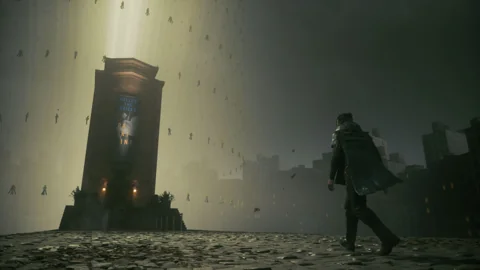
Control Resonant Tips: What to Do First
Start Control Resonant with a clear early-game checklist: reveal maps, find vendors, unlock travel doors, choose upgrades, and prepare for your first Resonant.
Light spoilers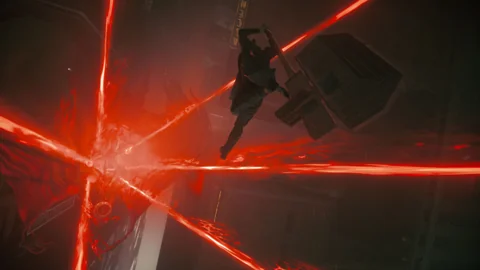
Things Control Resonant Doesn't Tell You
Learn Control Resonant’s easy-to-miss mechanics: Build Power, upgrade points, resets, artifact trade-offs, and how combat abilities use and recover Power.
Light spoilers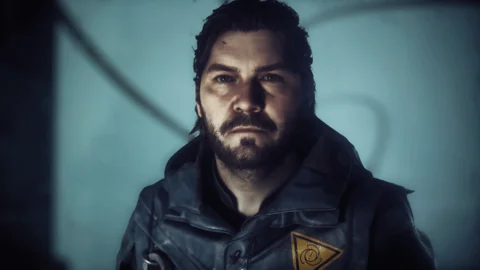
Dylan Faden
Who is Dylan Faden? His Control backstory, role as CONTROL Resonant's playable lead, voice actor Sean Durrie, and the shapeshifting Aberrant weapon.
Light spoilers